
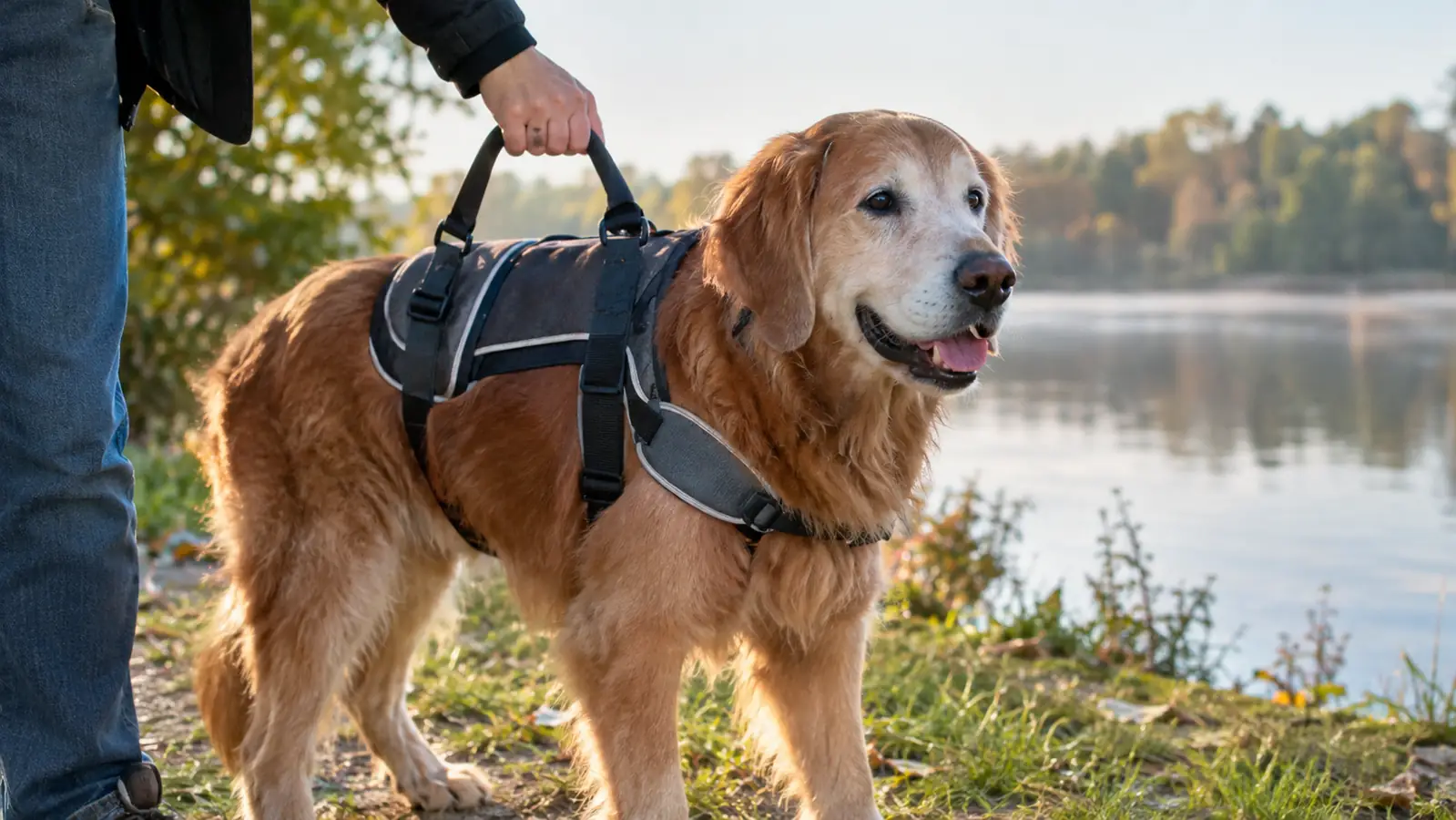
If your big dog's back legs are starting to give out, you already know the exact feeling I am about to describe. Murphy, our 12-year-old yellow Lab, used to launch himself off the tailgate of our pickup truck like he was showing off for the neighbors. These days he stands at the edge with his front feet planted, back legs trembling, looking back at me with an expression I can only read one way. He wants down. He just does not trust his body to do it anymore.
That is why I ordered the LOOBANI dog lift harness in the first place. Our vet had been honest with us about Murphy's hips and elbows: the stiffness was not going to reverse itself, and our job was to make his days comfortable without letting him hurt himself trying to be the dog he used to be. A rear support harness came up in that conversation, and after six months of using it nearly every day, I have opinions. This is the honest version, including the parts I had to learn the hard way.
The Quick Verdict
The LOOBANI lift harness does what it promises once you get past the sizing and the learning curve. It did not fix Murphy's hips, and it will not fix your dog's either. What it did was give us back our walks, and for a 12-year-old Lab that was worth every minute of the trouble.
Amazon Check Today's Price →A rear support harness that actually stays put
The LOOBANI supports the hind end without a bulky full-body wrap, and it has held up through six months of daily use with a 78-pound Lab. See today's price on Amazon and read what recent buyers of large senior dogs have to say.
Amazon Check Today's Price on Amazon →How I've Used It
I want to be clear about what this review is based on. Murphy is 78 pounds, which puts him right in the middle of the LOOBANI's stated range for large dogs, and we have used the harness almost every day for six months. That means two walks a day around the block, the trip down the porch steps each morning, and the tailgate routine for the truck. He also wears it when we go out to the lake on the pontoon boat, because the ramp down to the dock is the one surface he truly cannot trust. On rainy days we skip the long walk and just do the porch steps and the driveway, but the harness still goes on.
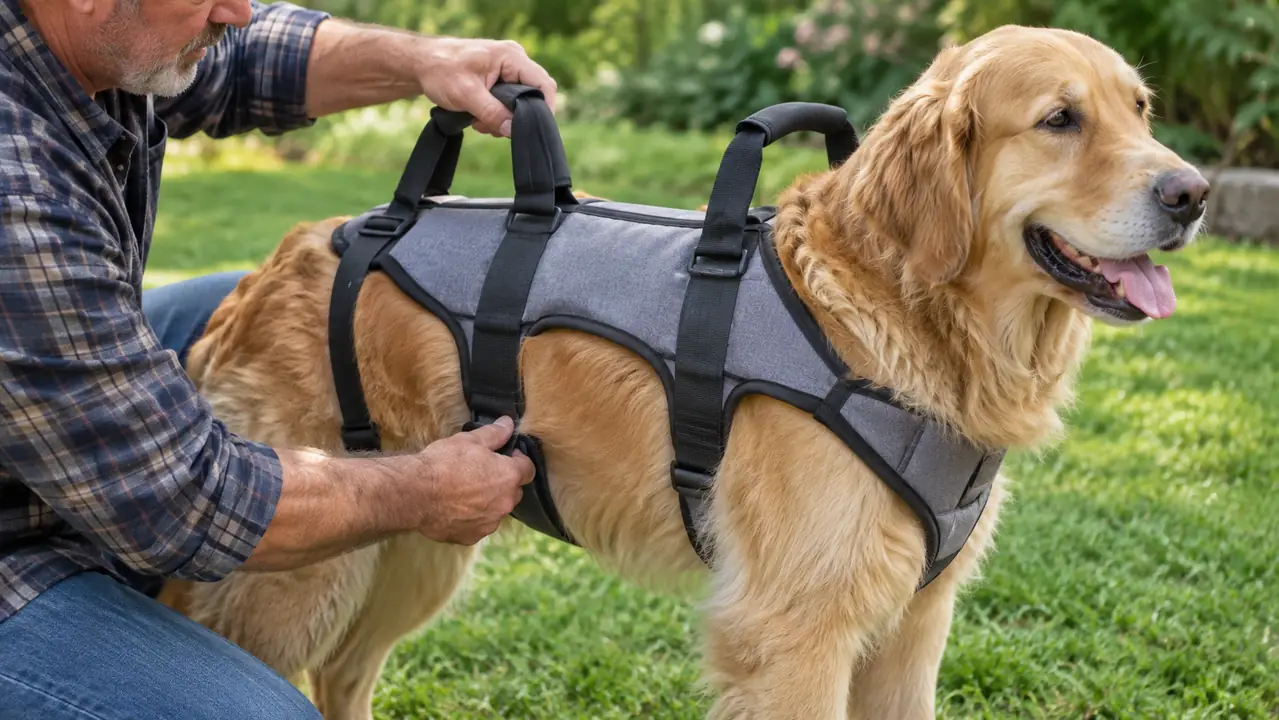
The way it works is simpler than it looks. The dog steps into two rear leg loops, the straps come up over the hind end, and a padded handle sits over his back near the base of the tail. When he needs help, I take hold of that handle and lift just enough to take the weight off his hips. He does the walking. I do the steadying. It is not a sling that carries him, and I will get to why that distinction matters in a minute.
Before I ordered it, I asked our vet whether a harness like this was a reasonable tool for a dog in Murphy's shape. She said yes, with two conditions: the dog still needs to be able to bear some weight on his own, and the harness is for support, not for hauling him around like a suitcase. That advice shaped how we use it, and I think it is the right way to think about any rear support product.
In case it helps to picture it, here is what our mornings look like now. Murphy wakes up stiff, the same as before the harness. He lies on his bed in the living room while I make coffee, and he does not try to get up until he is ready. When he does get up, I bring the harness over and he stands for me while I put the leg loops on. Then we go out the front door, down the porch steps slowly, and once we are on flat ground I take hold of the handle and we walk.
What the LOOBANI Actually Does (and Does Not Do)
The honest version is this: the LOOBANI is a rear support harness, not a wheelchair and not a cure. What it does well is take a portion of the weight off the back legs while the dog is moving. When Murphy's hips are having a stiff morning, he walks with his back end swaying and his hocks dropping low. With the harness on and a light lift on the handle, his back legs straighten out and his stride looks almost normal again.
What it does not do is carry the dog, fix the joint, or make a dog with no strength in the rear legs walk. If your dog cannot put weight on the back legs at all, you need a full-body sling or a cart, and honestly you need a conversation with your vet about quality of life. The LOOBANI is for the middle ground: dogs that still have strength but need help on flat ground, on slopes, and getting into vehicles.
That middle ground is exactly where Murphy lives, and I think it is where most senior big dogs live for a long time before things get truly bad. The harness buys them months of comfortable movement, which for a dog that has spent his whole life swimming off the boat is a real gift. We have a small ramp at the porch steps, and he uses it, but he still wants me at the handle on the way down. The harness is part of every one of those trips.
Sizing and Fit: The Part Nobody Warns You About
Here is what I wish someone had told me before the box arrived: getting the fit right takes more than one try, and the first try will not be the good one. The LOOBANI adjusts at the leg loops and at the straps over the back, and the difference between too loose and too snug is small. Too loose and the loops slide down around the hocks and the handle ends up lying flat against his back where you cannot grab it. Too snug and he walks like he is trying to step over something.
We got it wrong twice before we got it right. The first time, I had the leg loops set too high and the whole thing rode forward so the handle sat over his ribs instead of his hind end. Ray and I both had to get down on the floor with him, which for two people in their sixties is its own kind of workout. The second time I overcorrected and made the straps too tight, and Murphy let me know by planting his feet and refusing to move.
The third time was the charm, and here is the method that worked for us. I put the leg loops on one at a time while Murphy stands, then I tighten the straps evenly on both sides until the handle sits right over the base of his tail. Then I have him walk a few steps and watch the loops. If they stay put and he is moving normally, we are good. If the loops creep down, I start over with the whole thing a touch higher. It takes me about three minutes now. It took me twenty the first week.
The other thing nobody tells you: your dog has to be willing to be handled back there. Murphy is the patient sort, and even he gave me a look the first few times. If your dog is sensitive about his hind end, plan on spending a week just getting him comfortable with the routine before you ever try to go for a walk with it. Give yourself the same week. The fit is a skill, and you learn it faster than you think you will.
What Six Months of Daily Use Did to It
I spent thirty years working in a school office, which means I have watched a lot of things fall apart under daily use, and I have been pleasantly surprised by how this harness has held up. The padded handle is still comfortable in my hand even when Murphy is doing that thing where he leans his whole weight into the lift. The clips have not cracked. The stitching has not pulled anywhere, and Murphy is not gentle with his gear.
The fabric does show wear. The leg loops have rubbed against the hair on the inside of his legs, and there is some fuzzing along the edges where the straps slide through the buckles. None of it has affected how the harness works, and I would not call it a quality problem. I would call it six months of honest use on a 78-pound dog. When the leg loops get muddy from the lake, I rinse them in the sink and they dry overnight. That has been the whole of the maintenance.
The one thing I did not expect is that the harness has gotten easier to put on over time, and not just because I learned the routine. Murphy has learned the routine too. He stands still now when he sees me pick it up, and he will even step into the first leg loop on his own. That was not true in week one, and I want to be honest that it took patience on both sides to get there.
The real value of this harness is not something you will see in the product photos. It is the confidence it gives the dog. Murphy still has bad days, but he has stopped acting like his body is a surprise he has to brace for. Before the harness, there were mornings where he would stand at the top of the porch steps and just look at me, and I knew he was weighing whether the walk was worth the effort. Now he makes the decision faster, because he knows I am going to be right there holding the handle when his back end needs a break.
What Nobody Tells You About a Lift Harness
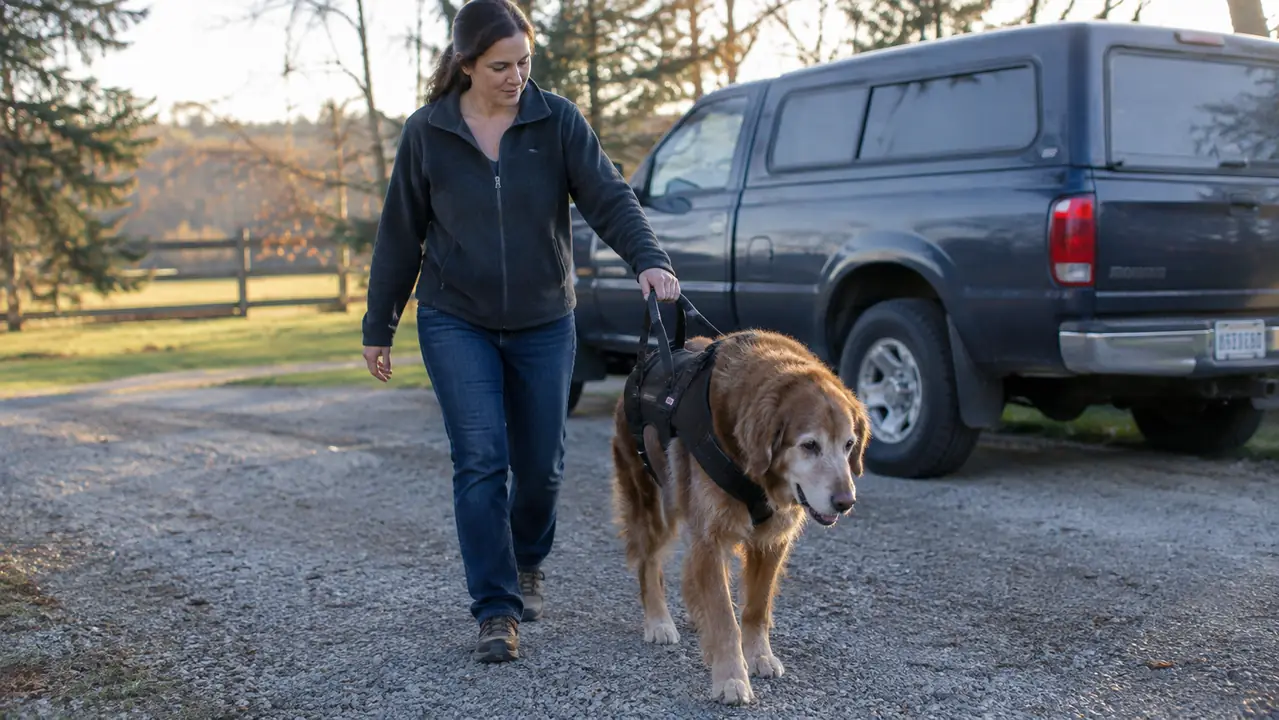
The first thing nobody tells you is that a lift harness changes your whole walking routine, not just the dog's. You cannot grab the leash and head out the door anymore. You need the three minutes to put it on, you need to check the fit every time, and you need to be ready to grab the handle the moment his back end dips. It is not a lot, but it is a routine, and routines take getting used to.
The second thing is that you will be doing a lot of bending, and your own back will have opinions about it. I am 63, and I have had mornings where I lifted for Murphy more than I lifted anything else all day. The handle on the LOOBANI is well placed and the height is right for a dog his size, but you are still bending and lifting the back end of a 78-pound dog. If you have serious back trouble of your own, this is a conversation to have with your doctor before you buy one.
The third thing is the hardest to write, so I will just say it plainly. The harness did not give Murphy back his puppy legs. It helped him on flat ground, it helped him with the tailgate, and it helped him feel steady enough to enjoy his walks again. It did not fix the stairs in our two-story house, and it did not fix the boat ladder. He still needs help in those places, and he still has bad mornings where he does not want to get up at all. The harness is a tool, not a cure, and anyone who tells you otherwise is selling something.
The fourth thing is more practical. When Murphy has to do his business, the leg loops change how he positions himself, and I have learned to give him room and a little patience. It is a small thing, but it is the kind of small thing that nobody puts in the product description, and it is the kind of thing that makes the difference between a harness you use and a harness you give up on.
Alternatives We Considered
Before I settled on the LOOBANI, I looked at two other kinds of rear support. The first was a full-body sling, the kind with a band that goes under the belly and a handle over the back. It gives more support, especially for a dog that is weaker, but it is also more gear to wrestle with, and for Murphy's situation it felt like more than we needed.
The second was a simple rear sling with a single strap that goes under the hind end. It is lighter and cheaper, but it does not give the same control as the leg loops, and I worried it would be harder to keep in place on a dog with a big rear end. The leg loops on the LOOBANI are what make it stay put, and after six months I am convinced that was the right feature to pay attention to.
I will also say this: we talked to our vet before we bought anything, and I would tell anyone in the same situation to do the same. A harness is a tool for managing a problem, not a treatment for it. If your dog's stiffness is new or getting worse fast, that is a conversation for the vet, not the shopping cart.
After six months, I would buy the LOOBANI again, and I would buy it sooner. The sizing frustration was real, and the learning curve was real, but the harness has given Murphy something no supplement or bed pad could give him: the ability to keep doing the things that make him happy. He still swims when we take him to the lake, he still goes for his walks, and he still greets Ray at the door like a dog half his age. The harness does not do any of that for him. It just makes sure his back end does not stop him from trying.
What I Liked
- Takes real weight off the hind end without a bulky full-body sling
- Leg loops stay put once you get the fit right
- Padded handle stays comfortable even when a 78-pound dog leans into it
- Has held up through six months of daily use with no broken clips or pulled stitching
- Murphy stands still for it now, which tells me it does not hurt him
Where It Falls Short
- Sizing takes trial and error, and the first tries will not be the good ones
- There is a learning curve for both the dog and the person doing the lifting
- It does not help with stairs, the boat ladder, or any situation where the dog needs full support
- You have to check the fit every single time you put it on
- It is a support tool, not a treatment, and it will not fix the underlying joint problem
The LOOBANI did not give Murphy back his puppy legs. It gave him back his walks, and for a 12-year-old Lab, that was the whole point.
Who This Is For
Buy the LOOBANI if your dog still has strength in the back legs but needs help on flat ground, getting up from a lie-down, or climbing into a vehicle. It is for owners who are willing to spend a week learning the fit and who have a dog that tolerates being handled around the hind end. It is for the middle ground of senior dog care, the long stretch where a dog is not in crisis but is clearly slowing down, and where a little support can mean the difference between staying home and going for the walk.
Who Should Skip It
Skip it if your dog cannot bear any weight on the back legs at all. That dog needs a full sling or a cart and a serious conversation with your vet. Skip it if your dog panics when you touch near the hind end, because you will not get the harness on without a fight. Skip it if you have your own back trouble that makes bending and lifting the rear end of a 78-pound dog a bad idea. And skip it if you are hoping a harness will fix the underlying joint problem, because that is a job for your vet, not for a piece of gear.
The honest bottom line on the LOOBANI
For a big senior dog that still wants to walk, the LOOBANI lift harness is a tool that earns its place in the routine. See today's price on Amazon and read the recent reviews from owners of large senior dogs before you decide.
Amazon Check Today's Price on Amazon →